Product & Material Transit
Automated Transportation for Products and Materials
Automated Conveyor Systems
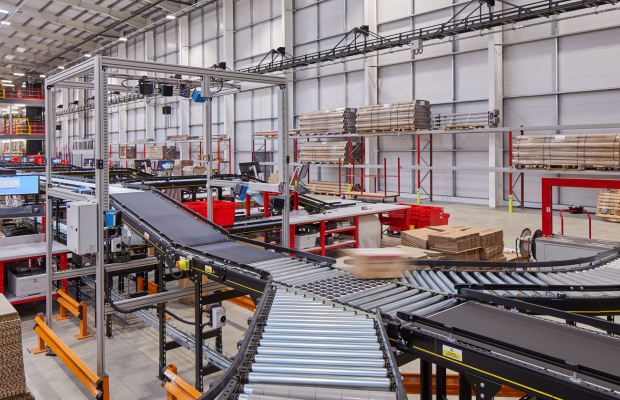
Automated conveyor and material transit systems eliminate manual handling, reduce bottlenecks, and ensure predictable flow across production, inbound, order pick stations, storage, dispatch etc. They can integrate with WMS/WCS, robotics, and automated storage systems for end-to-end efficiency.
Whether the item being handled is a tote bin, poly bag, carton, jiffy bag, pallet etc, there are many possible solutions.
Material Transit Automation
CSL will design the solution to suit your products, requirements, building and budget utilising technologies such as:


Automated Conveyor & Material Transit Solutions for Seamless, Safe Flow
Move goods smarter, faster, and with fewer manual touches.
We design, integrate, and support automated conveyor and material transit systems that connect production, storage, and despatch with predictable flow, robust safety, and measurable ROI, scaled to your footprint and future growth.
Product transit conveyors can be used alongside other interfloor solutions such as spiral conveyors and vertical elevators
Challenges
Relying on manual handling in warehouses, manufacturing, or distribution can create major operational challenges. Hand-moving items often causes bottlenecks, slows workflows, and reduces efficiency. Rising labour costs add financial pressure, while human error can result in inaccurate orders, misplaced stock, or delayed deliveries. We can help resolve:
- Manual movement bottle necks
- Rising labour costs
- Error rates
- Peak season strain
- Heath and safety risks
- Irregular product flow
Industry Applications
CSL Automation solutions keep materials moving efficiently across manufacturing, warehousing, and eCommerce operations.
- Manufacturing: Line-side supply, WIP movement, finished goods transfer.
- Warehousing & Distribution: Inbound/outbound flow, sortation, accumulation.
- eCommerce Fulfilment: High-speed order routing, order picking zones, packing integration
Automating The Movement
By automating the movement of goods within a facility companies will see reductions in labour costs and MHE movements while also keeping a consistent flow.
Product transit conveyors can be used alongside other interfloor solutions such as spiral conveyors and vertical elevators.
Benefits:
- Efficiency: Continuous flow reduces downtime.
- Labour Savings: Fewer manual touches, safer operations.
- Scalability: Modular design for future expansion.
- Accuracy: Integrated scanning and routing logic.
- ROI: Typical payback in 12–24 months.
Discuss your automation Project
Thank you for your interest in CSL Automation. As one of the UK’s leading conveyor and automation integrators, we can help design and install a system to help you take your business to the next level.
Start your automation journey today.
Measurable Outcomes
Relying on manual handling in warehouses, manufacturing, or distribution can create major operational challenges. Hand-moving items often causes bottlenecks, slows workflows, and reduces efficiency. Rising labour costs add financial pressure, while human error can result in inaccurate orders, misplaced stock, or delays.
Challenges Include:
- Manual movement bottle necks
- Rising labour costs
- Error rates
- Peak season strain
- Heath and safety risks
- Irregular product flow
Industry Applications
- Manufacturing: Line-side supply, WIP movement, finished goods transfer.
- Warehousing & Distribution: Inbound/outbound flow, sortation, accumulation.
- eCommerce Fulfilment: High-speed order routing, order picking zones, packing integration
Frequently Asked Questions
What is an automated transport system?
An automated transport system is any level of automation that can be implemented to transport items from one place to another within a warehouse. This can be achieved through utilising technology such as Autonomous Mobile Robots (AMRs), Automated Guided Vehicles (AGVs) or conveyor belt transportation.
What is the purpose of AGV?
Automated Guided Vehicles (AGVs) transport items without the need for human intervention. This automates the material handling process, allowing for a more efficient workflow, improved safety, and increased productivity.
What is the difference between AGVs and conveyors?
Transport conveyor systems have predetermined routes that are fixed and cannot be changed without redesigning the whole system. Automated Guided Vehicles (AGVs), however, do not follow a fixed path and can be redirected or take detours, displaying its flexibility. Additionally, if there are any obstructions in the AGV’s path, it can use its sensors to detect the issue and either reroute itself or wait for the obstruction to be moved to carry on its predetermined path.

Which conveyor type is best for mixed items?
Belt and modular plastic are versatile for mixed SKUs; roller is ideal for totes and cartons with accumulation. We validate via trials and simulation.
Can you integrate with our WMS/WCS?
Yes. We implement real‑time destination logic, exception handling, and dashboards. Middleware can be provided where required.
How do you handle elevation and tight spaces?
Spiral conveyors, vertical elevators, and compact curves/transfers reduce footprint while maintaining flow.
What maintenance is required?
Preventive programmes covering belts/chains, bearings, sensors, and software health. We offer 24/7 support and remote diagnostics.